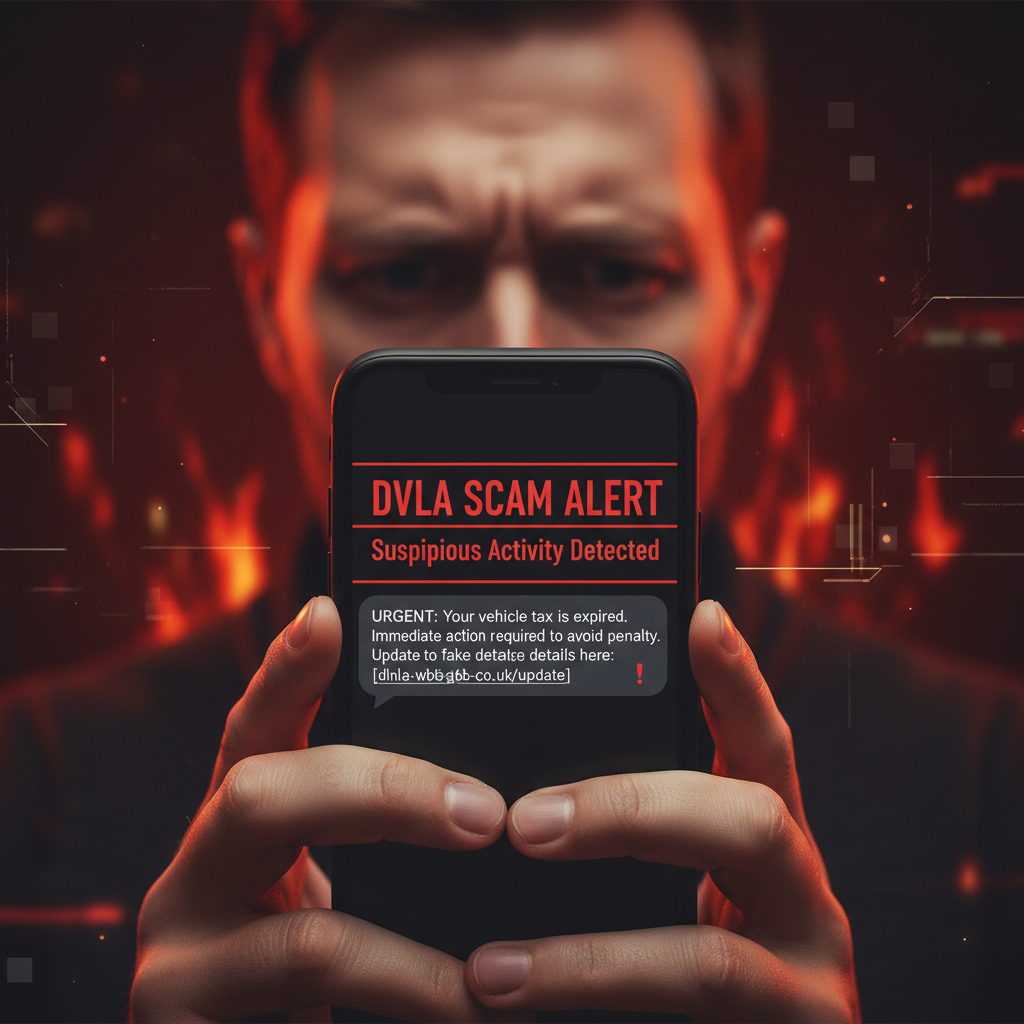
DVLA Scams Surge: The Fake Tax Refund Text You Need to Avoid
Your phone buzzes. A text arrives claiming the DVLA has found an error on your vehicle record and is issuing a tax refund. All you need to do is click the link and update your details to release the funds.
Don't. It's almost certainly a scam.
The Attack Wave
In a recent surge of fraud, Action Fraud recorded over 1,100 DVLA-related scams within just two weeks. These aren't minor incidents—victims are losing money and having their personal data compromised. The scams use cloned websites, fake emails, and text messages that look disturbingly authentic.
The most common variant right now claims you're entitled to a vehicle tax refund. The psychology is brilliant from a scammer's perspective: people trust the DVLA, refunds feel legitimate, and the sense of urgency ('Claim now before funds expire') overrides caution.
What These Scams Actually Look Like
The DVLA has been crystal clear on this point: they do not send texts or emails about vehicle tax refunds. If you receive one, it's fraudulent. Full stop.
Here's what to watch for:
The Data Breach Danger
Beyond the immediate financial loss, these scams are targeting your personal information. If you input your name, address, date of birth, or (worse) bank details into a fake DVLA site, fraudsters have the keys to your identity. They can open accounts, take out credit, or sell your data.
What the Real DVLA Actually Does
The legitimate DVLA communicates through its official website and, in some cases, by phone call if they initiate contact about a specific issue with your vehicle record. They:
How to Protect Yourself
1. Never click links in unsolicited texts or emails—even if they look official. Instead, go directly to the DVLA website by typing the URL yourself (gov.uk/dvla) or calling their phone number.
2. Check your vehicle record directly through the DVLA's official checker or with VRMCheck, which pulls real-time data. If there's a legitimate issue, you'll see it there.
3. Report suspicious messages to the DVLA and Action Fraud (0300 123 2040 or report-fraud.org.uk). Your report helps authorities identify and shut down scam networks.
4. Enable text filters on your phone to catch phishing attempts.
5. Share this information with family members and colleagues, especially older relatives who may be more vulnerable to these tactics.
If You've Already Been Caught
If you've clicked a link or entered information:
1. Stop any payments immediately
2. Contact your bank and report the fraud
3. Report the scam to Action Fraud
4. Check your credit report with Experian or Equifax for unauthorised activity
5. Consider a fraud alert with your bank
Your Vehicle Data is Sacred
Your registration number, vehicle history, and MOT records are valuable. Keep them safe. Scammers know that drivers trust the DVLA, and they're exploiting that trust. Don't let them.
Verify your vehicle's real MOT history, tax status, and records instantly with VRMCheck's free checker at https://vrmcheck.uk. No suspicious links, no data theft—just the truth about your car.
Ready to check a vehicle?
Free to start · Full report from £5.97 · Instant · No signup